“If you love to be surprised by twist after twist, and don’t mind being manipulated and given false information in the thoughts of the first-person narrator, you will love this story. If you don’t appreciate the author’s manipulation – wait for the movie. I think it will be very good.”
There is a lot good about this page-turner of a mystery. There is also a lot wrong. Your impression of the book will depend on whether you can overlook the blemishes and problems so you can enjoy the story as if watching a movie and fill in what the book should be in your head. (Note that the book is being made into a film, and I think it will work much better on screen, see below.)
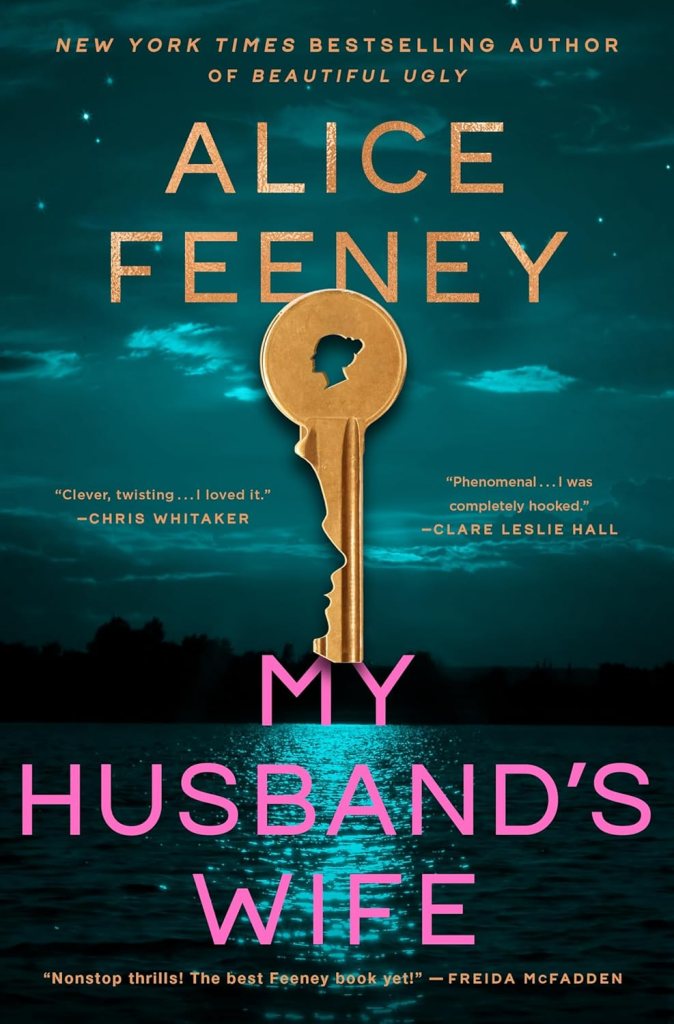
The premise is delicious. A woman named Eden Fox moved with her husband from London to a small fishing village in Cornwall. They occupy a historic old house high on a hill. Two weeks after moving in, Eden is excited that the local art gallery is hosting a reception for the opening of a show of her paintings. The evening of the gallery opening, Eden goes out for a run, taking only her house key on a fob given to her by her husband, Harrison (see book cover). When she returns home to shower and change for the reception, her key doesn’t work in the lock. When she knocks, a woman older than her answers, wearing the dress Eden planned to wear that evening. When Eden (naturally) askes, “who are you?” the woman responds “I’m Eden Fox. This is my house. Who are you?” Eden spends the first several chapters attempting to find a way to get someone to believe that she is Eden Fox and the woman in her house is an imposter. Her husband, Harrison, says the woman in the dress is his wife, Eden Fox, and he does not recognize our first-person narrator. Needless to say, this is very disconcerting and quite a puzzle.
Eden escapes from the local police sergeant, Carter (who is a key player), breaks into her house, steals the keys to her car, and drives away, en route to the assisted psychiatric living facility where her daughter, Gabrielle, has lived for the past six months, since turning eighteen. And there begins the search for truth and the unwrapping of a many-layered onion that is this story.
The good news is that the writing – all in first-person present narration from the point-of-view of five different characters – is tight and easy to read. The author makes the short chapters flow easily and clearly marks each chapter with the date (much of the early story takes place six months earlier) and the POV by naming the character through whose eyes (and in whose head) the narration happens. As the story unfolds, the reader is left breathless trying to keep up with the many (many!) twists. If you love twists upon twists to the point that you cannot possibly anticipate or predict what big reveal will come next, you will enjoy this story. I found it compelling and was unable to stop reading, despite my issues with the author and story.
The bad news is that the author violates what I consider to be a cardinal rule – you can’t lie to the reader. It’s fine if a story is written in first-person and the narrator/protagonist doesn’t have all the information. It’s fine if the other characters lie to the hero, giving them bad information that they must deal with and sort through. (Here, the police officer, Carter, could have been the protagonist and would have had to unravel who is telling him the truth.) But when a character is narrating in first-person present and much of the story is told through the thought-bubbles of the characters as they experience events and think back on past events (to fill in important information for the reader), an author should not have the characters give false information in their own heads, giving the reader bad information about the story, with the goal of revealing the true information later as an unexpected twist. It’s dishonest to your reader. Sure, it works – the reader naturally believes that what the character says happened really happened the way the character’s memory plays it out. Sure, you can have an unreliable narrator, or the narrator may not fully recall what really happened – all these are reasonable tropes and literary devices. But you should not outright lie to the reader when the character knows full well what the truth is. I have a problem with that.
Which brings me to the future movie. This story will work really well as a movie, where the audience will see the vents, hear the dialogue, and experience the flashbacks as visual images. The viewer will have to puzzle out (like Carter) who is telling the truth, who is lying, why they are lying, and what everyone’s real motives are. A video flashback and show the events, while leaving out key bits. When the movie-watcher later sees that there was more going on in that flashback than met the eye the first time, it’s an ah-ha moment (and perhaps there will be clues along the way that will allow the viewer to see how they might have figured it out). It works in a movie. But when the reader is inside the head of the first-person narrator, we expect that the narrator’s thoughts are complete and truthful (at least as far as the character can remember).
So, my problem with the book is the presentation and how the first-person present narration choice misleads the reader in ways that I did not appreciate. Sure, lots of twists, but twists that would have been more fun if I didn’t feel unfairly manipulated by the author.
The events of the story and the interrelationships of the characters are implausible, but not entirely impossible. There are events that stretch credulity and leave you scratching your head to imagine why someone would behave as described (even after all the final reveals) but you put those thoughts out of your head if you enjoyed the story and the writing style. If you were annoyed by the writing style and the manipulations, you will tend to re-question how very, very unlikely some of the events were. And yet, you still find a way to enjoy the read.
As I said, if you love to be surprised by twist after twist, and don’t mind being manipulated and given false information in the thoughts of the first-person narrator, you will love this story. If you don’t appreciate the author’s manipulation – wait for the movie. I think it will be very good.

 kevingchapman.com
I would love to read it. After all, Agatha Christie did something like what you mentioned here with The Murder of Roger Ackroyd. Everything is fair in love and war (and books). 🙂
LikeLike
Great! The good news is that it’s well-written. I’m sure it’s available. I read it for a book club.
LikeLike